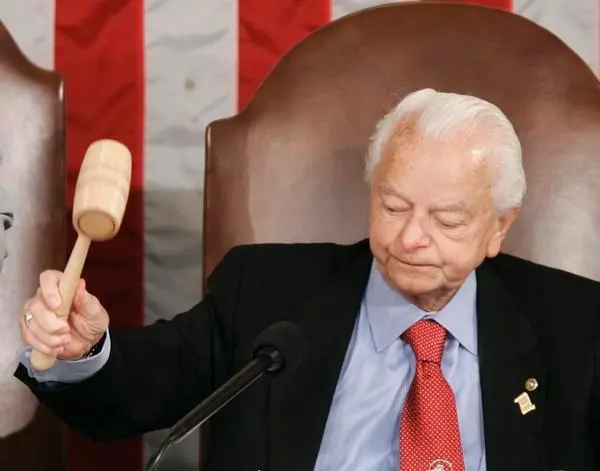
Who was Robert Byrd?
Robert Byrd was an American politician and one of the longest-serving U.S. Senators in history, representing West Virginia for over five decades. Known for his deep knowledge of the U.S. Constitution, mastery of Senate rules, and powerful influence in Congress, Byrd played a major role in shaping modern American legislative history. His political career spanned more than 60 years, making him one of the most influential lawmakers of the 20th and early 21st centuries.
Quick Profile
-
Full Name: Robert Carlyle Byrd
-
Born: November 20, 1917
-
Birthplace: North Wilkesboro, North Carolina, USA
-
Died: June 28, 2010
-
Age at Death: 92 years
-
Political Party: Democratic Party
-
Profession: Politician, U.S. Senator
-
State Represented: West Virginia
-
Years in U.S. Senate: 1959–2010
-
Net Worth: Estimated $5–7 Million
-
Known For: Longest-serving U.S. Senator, Senate leadership roles
Early Life & Background
Robert Byrd was born in North Carolina but raised in rural West Virginia, where he experienced poverty firsthand. After being orphaned at a young age, he was adopted by relatives and grew up in coal-mining communities.
Education
-
Attended Beckley College
-
Studied at American University
-
Largely self-educated in law and constitutional studies
His humble upbringing deeply shaped his political philosophy and dedication to West Virginia.
Early Career & Entry into Politics
Byrd began his political career in the West Virginia House of Delegates in the late 1940s before moving to the state senate.
Key Early Roles
-
West Virginia House of Delegates
-
West Virginia State Senate
-
Elected to the U.S. House of Representatives (1953)
His disciplined work ethic quickly elevated him within the Democratic Party.
U.S. Senate Career
Robert Byrd entered the U.S. Senate in 1959, beginning one of the longest tenures in American history.
Major Senate Leadership Roles
-
Senate Majority Leader
-
Senate Minority Leader
-
President Pro Tempore of the Senate (four times)
He was deeply respected for his command of Senate procedures and parliamentary law.
Legislative Influence & Achievements
Byrd was known as a master legislator who used his influence to secure funding and development for West Virginia.
Key Contributions
-
Infrastructure funding for roads, bridges, and education
-
Advocacy for Appalachian development
-
Strong defender of congressional authority
-
Opponent of executive overreach
-
Promoter of constitutional governance
His speeches on the Senate floor often cited history, philosophy, and the Constitution.
Constitutional Scholar Reputation
Robert Byrd earned a reputation as one of Congress’s foremost constitutional experts.
Notable Traits
-
Quoted the Founding Fathers frequently
-
Opposed policies he believed violated constitutional principles
-
Authored books on Senate history and governance
He believed deeply in checks and balances and the separation of powers.
Controversies & Evolution
Byrd’s early life included controversial associations that he later publicly renounced.
Key Points
-
Expressed regret and condemnation of past mistakes
-
Publicly supported civil rights legislation later in his career
-
Became a strong advocate for racial equality
-
Received recognition from civil rights organizations
His political evolution is often cited as an example of personal and ideological change.
Later Years in the Senate
Even into his late 80s and early 90s, Byrd continued serving in the Senate.
Late-Career Focus
-
Healthcare access
-
Education funding
-
Veterans’ benefits
-
Protecting Senate traditions
Despite declining health, he remained active until shortly before his death.
Death
Robert Byrd passed away on June 28, 2010, at the age of 92.
National Response
-
Bipartisan tributes from lawmakers
-
Recognized as a legislative giant
-
Remembered for dedication to public service
He was honored as one of the most consequential senators in U.S. history.
Net Worth
Robert Byrd’s estimated net worth at the time of his death was $5–7 million.
Sources
-
Government salary
-
Book royalties
-
Investments
Despite long service, he was not known for excessive personal wealth.
Awards & Honors
-
Presidential Medal of Freedom (posthumous discussions)
-
Multiple honorary degrees
-
Senate buildings and institutions named in his honor
-
Widely regarded as a Senate historian
His name remains deeply tied to the history of the U.S. Congress.
Frequently Asked Questions
How long did Robert Byrd serve in the Senate?
Over 51 years, making him the longest-serving U.S. Senator at the time.
Which state did Robert Byrd represent?
West Virginia.
What party was Robert Byrd affiliated with?
Democratic Party.
Was Robert Byrd Senate Majority Leader?
Yes, he served as both Majority and Minority Leader.
When did Robert Byrd die?
June 28, 2010.
What was Robert Byrd known for?
Senate leadership, constitutional knowledge, and legislative influence.
Conclusion
Robert Byrd’s career stands as one of the most remarkable in American political history. From humble beginnings in West Virginia to becoming a towering figure in the U.S. Senate, his legacy is defined by longevity, deep institutional knowledge, and unwavering belief in constitutional governance. His impact on Congress and American lawmaking continues to be studied and remembered.